How to build a map-locked hero challenge in Marvel Rivals
Video: The MAP Decides Our Heroes in Marvel Rivals
You can order the same kind of articles for your own video to boost it on YouTube and Google. Just message the Telegram bot @sat_sit_bot. It writes articles around your video, embeds the video and publishes them on popular niche websites (no ads). Try it free: 50 articles on us.
· based on the channel Salty Phish
Marvel Rivals is a 6v6 hero shooter where the map you load into can decide your character just as much as the enemy composition does. The map-locked challenge turns that into a rule: you queue quickplay, see which arena the game picks, and then only heroes tied to that location by lore, comics or in-game story are legal picks for the match. It is a self-imposed constraint, not a game mode, and it is easiest to run with a full squad on voice chat — the same setup streamer Salty Phish uses in the video, with his live channel at twitch.tv/saltyphish open for anyone who wants to watch the format run in real time.
What the map-locked hero challenge actually is
The challenge is a house rule layered on top of normal Marvel Rivals play: the randomly assigned map is the only thing that determines your hero pool. You do not counter-pick, you do not fill a role because the team needs it, and you do not swap mid-match to fix a losing fight — the arena decided before the spawn doors opened.
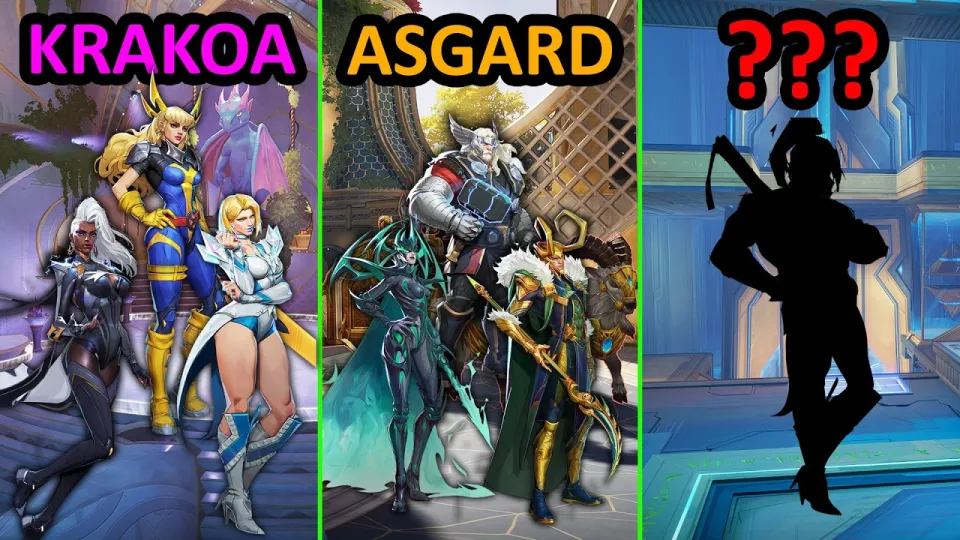
Marvel Rivals shipped with 33 heroes split across Vanguard, Duelist and Strategist roles, and its map list is built from named Marvel locations rather than generic arenas. That is what makes the format work: almost every map has a canonical cast. Klyntar is symbiote territory, so Venom is the obvious lock. Asgardian maps open Thor, Loki and Hela. Wakanda maps point at Black Panther and Shuri's circle. The rule is only as strict as the group agrees it is, which is why half the fun is arguing about the edge cases.
How to set up the rules before your first queue
A clean rule set prevents the mid-match arguments that kill the format in the first ten minutes. Agree on all of the following before anyone hits queue.
- Pick the mode. Quickplay is the practical choice — nobody's rank is on the line when four players lock Duelists on a map that only supports one. Competitive works only with a full six-stack.
- Decide who reads the map. The map is revealed in the loading screen; one player calls it out and the group picks from the legal list before the spawn timer runs out.
- Set the lore standard. Choose one: strict (only characters with a direct, named connection to the location), loose (any character who has appeared there in comics, MCU or Rivals story), or vibes-based (whatever the group accepts without a five-minute argument).
- Allow one wildcard per match. A single flex pick keeps the team functional when a map's legal pool has no Strategist.
- Log the disputes. Keep a running list of contested picks so the next session has a settled ruling instead of a repeat debate.
Map-to-hero picks that hold up
These are the locks that survive most arguments, based on Marvel Rivals' own map design and story text rather than fan speculation.
- Klyntar: Venom is the anchor. The map is a symbiote world, and the wider Knull storyline pulls in the Guardians of the Galaxy as well, since Rivals lore sends them there on a mission connected to Wakanda.
- Asgard: Thor, Loki and Hela are the core three. Hela's connection to Hel and Asgard's death imagery makes her the least controversial pick on the list.
- Wakanda maps: Black Panther is the default, with Shuri-linked characters and Bucky Barnes as strong supporting picks — Rivals' own dialogue establishes that the Wakandans built his arm, which is a lore fact rather than an MCU import.
- Shin-Shibuya: Psylocke and Spider-Man fit the Tokyo setting immediately. Iron Man is the interesting case: the Stark-Fujikawa building appears on the map and he has voice lines referencing it, which is enough for most groups to allow him.
- Lower Manhattan: Moon Knight, Spider-Man and any New York street-level character. Devil Dinosaur belongs here too — he lives in New York with Moon Girl, so a giant dinosaur on a Manhattan rooftop is canon, not a stretch.
- Spider-Island: The 2099 setting opens Miguel O'Hara's corner of the universe, and characters active in that era — Punisher and Captain America among them — have a defensible claim depending on how strict your lore standard is.
The lore arguments that decide most rounds
Most disputes in this format come from one question: does a character need to live on the map, or just have appeared there once? Marvel Rivals answers part of that itself. The game's backstory places Jeff, Psylocke and Mantis in the Collector's museum, which makes them legal on Knowhere-adjacent and Collector-themed maps even though none of them are native to that location.
The same logic expands Wakanda considerably. Rivals frames its Wakandan arenas as an intergalactic empire, and the Guardians of the Galaxy were dispatched from Wakanda to Klyntar — the Milano can be seen leaving the spaceport in map animations. If you accept that, every Guardian becomes legal on Wakanda maps, and Venom follows close behind. Groups that prefer tight rules reject the expansion; groups that prefer chaos embrace it.
A practical fix: write your rulings down. Once the group has agreed that museum imprisonment counts as a connection, that ruling applies to every future session, and the debate stops eating the first two minutes of every match.
Common problems and how to fix them
The legal pool has no healer. This is the most frequent failure. On maps where the lore points at Duelists and Vanguards, nobody wants to lock a Strategist. The wildcard pick exists for exactly this — spend it on a healer and move on.
Someone picks a hero nobody can justify. Ask for the connection in one sentence. If it takes longer than that, the pick is out. This keeps the format moving without turning it into a research project.
The map is one you have never seen. Marvel Rivals rotates a large map pool, and newer arenas arrive with each season. Keep a shared note with a legal list per map and update it after each session rather than arguing from memory mid-match.
The team gets rolled. Accept it. The point of the challenge is that the map, not the meta, decides the composition. A losing match on a bad lore map is the format working as intended.
Useful links
- Live channel: twitch.tv/saltyphish
- Twitter: https://twitter.com/SaltyPhish
- TikTok: https://www.tiktok.com/@saltyphish
- Reddit: https://reddit.app.link/r_SaltyPhish
- Instagram: https://www.instagram.com/saltyphish/
Final take
The map-locked challenge is the cheapest way to make Marvel Rivals feel new again: no new heroes, no new patch, just a rule that forces you onto characters you would never pick in ranked. The format lives or dies on the group's willingness to settle lore disputes once and stick to the ruling, so build the list, log the edge cases, and let the arena pick the team. The version in the Salty Phish video is a good template — quickplay, a rotating cast, and a running argument about who actually counts as a New Yorker — and his live channel at twitch.tv/saltyphish is where the format keeps getting tested.
Key takeaways
- The rule set: every quickplay match, the random map decides which hero you are allowed to play — no free picks, no exceptions.
- Klyntar locks you to symbiote characters such as Venom; Asgardian maps open Thor, Loki and Hela.
- Lore disputes decide most rounds: Shin-Shibuya, Wakanda, Spider-Island and Lower Manhattan all have defensible extra picks.
- Marvel Rivals launched with 33 heroes across three roles, so a full map-to-hero list is possible for every arena.
- The format works best in quickplay with a group, because ranked teammates rarely accept self-imposed hero limits.
Source: The MAP Decides Our Heroes in Marvel Rivals · Markdown version
Questions & answers
Does Iron Man count as a legal pick on Shin-Shibuya in Marvel Rivals?
Yes, under most rule sets. The Stark-Fujikawa building appears on the map and Iron Man has dialogue referencing it, which is a direct in-game connection rather than a comics-only stretch. Groups running strict location rules sometimes reject it, so settle the ruling before the session starts.
Which heroes are legal on Wakanda maps?
Black Panther is the baseline, and Bucky Barnes qualifies because Rivals' own dialogue establishes that the Wakandans built his arm. If your group accepts the intergalactic-Wakanda reading, the Guardians of the Galaxy become legal too, since Rivals lore sends them from Wakanda to Klyntar.
Can characters who are imprisoned somewhere count for that map?
In Marvel Rivals' backstory, Jeff, Psylocke and Mantis were held in the Collector's museum, so many groups treat imprisonment as a valid connection. It is a loose-standard ruling, not a strict one — decide which standard you are using before the first queue.
Is Devil Dinosaur a valid New York pick?
Yes. Devil Dinosaur lives in New York with Moon Girl, so he is a legitimate Lower Manhattan pick even though a dinosaur on a rooftop looks absurd. The connection is canon in the comics, which is enough for a loose lore standard.